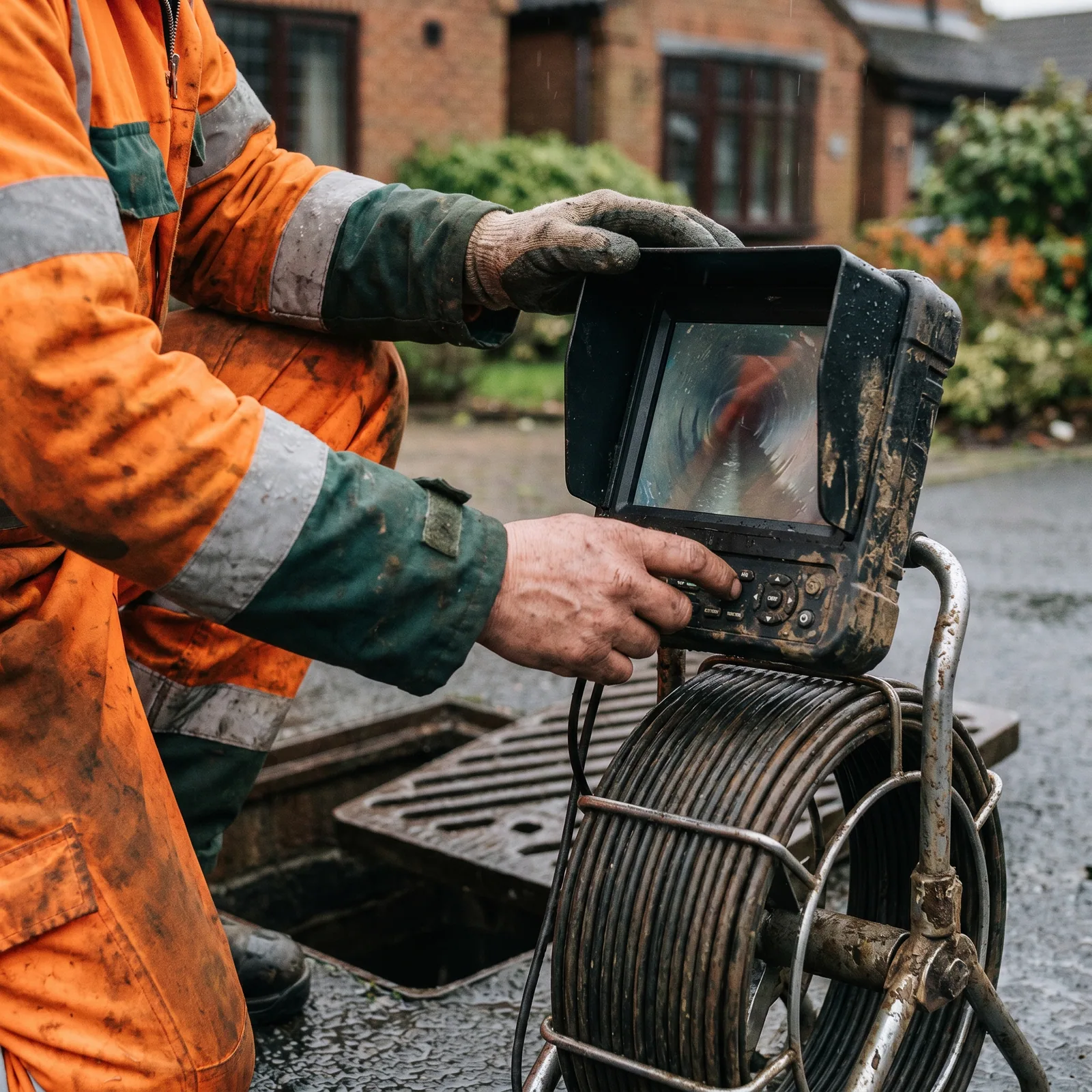
Rodding, high-pressure water jetting and a CCTV drain survey all get mentioned when a drain blocks, but they are not the same thing. Rodding and jetting are ways to clear a blockage. A CCTV survey does not clear anything; it is a camera inspection that shows why a drain is blocking.
The short version: a first-time, localised blockage can often be cleared with rodding or jetting. If the same drain keeps blocking, the cause is unclear, or damage is suspected, a CCTV survey is usually the better next step so that any repair is based on evidence rather than guesswork.
Quick answer: which do you need?
- Rodding: mechanical clearing for a straightforward, accessible blockage
- Jetting: high-pressure water for silt, grease and stubborn build-up
- CCTV survey: a camera inspection to find the cause, not a way to clear the drain
- First-time, localised blockage: rodding or jetting may clear it
- Repeat, unclear or suspected damage: a CCTV survey before any repair
What each method does
Rodding
Rodding uses flexible drain rods pushed through an inspection chamber or access point to physically break up or push a blockage along the pipe. It is a simple, well-established method that often works for blockages close to an access point, such as a build-up of waste or debris in a straightforward run.
Rodding is less effective where the blockage is a long way from access, where silt or grease coats the pipe walls, or where the drain is damaged. It can move a blockage along without fully removing what caused it, which is why a drain sometimes blocks again shortly afterwards.
High-pressure water jetting
Drain jetting uses controlled high-pressure water through specialist equipment to cut through and flush away grease, silt, scale, soft blockages and general build-up. Because it scours the pipe rather than just poking a hole through the blockage, it often gives a more thorough clear than rodding on the same run.
Jetting is well suited to greasy kitchen drains, silted outside drains and gullies, and stubborn build-up along a longer run. It is not a repair. If a pipe is cracked, collapsed or displaced, jetting may restore flow for a while but cannot fix the underlying fault, and on fragile or badly damaged pipework it may not be appropriate at all.
CCTV drain survey
A CCTV drain survey feeds a camera along the drain to show its condition from the inside. It does not clear a blockage; its job is diagnosis. A survey can reveal root intrusion, cracks, displaced joints, collapsed sections, poor falls or debris, and show where along the run the problem sits.
A survey is most useful when a blockage keeps returning, when the cause is unclear, or when you need to understand a fault before arranging a drain repair. It is less necessary for a one-off blockage that clears easily and does not come back.
A simple decision path
- First-time, localised blockage in one drain: rodding or jetting may clear it
- Greasy, silted or stubborn build-up: jetting is often the better clearing method
- Same drain keeps blocking after clearing: arrange a CCTV survey to find out why
- Water backing up across several fixtures or outside drains: the cause may be further along the run, and a survey helps locate it
- Suspected cracked, collapsed or root-damaged pipe: survey first, so any repair is based on what the camera shows
The aim is to avoid repeatedly clearing the same drain without ever understanding why it blocks. If you are dealing with a recurring problem, a survey is often the step that breaks the cycle.
How the three work together
In practice these methods are often used in sequence rather than as either/or choices:
- Clear: rodding or jetting restores flow so the drain can be used and then inspected.
- Inspect: once the drain is clear, a CCTV survey can show its true condition without debris hiding the pipe.
- Repair: if the camera finds damage, a targeted drain repair addresses the cause rather than the symptom.
Clearing a drain and surveying it are not competing options. A blockage often has to be cleared before a camera can see the pipe properly, and a survey often turns a repeat blocked drain into a problem that can actually be fixed.
Useful information to include in the enquiry
A short, practical summary helps the enquiry be understood quickly:
- Your postcode
- What is affected and whether it is inside or outside
- Whether one drain or several fixtures are involved
- Whether the drain has been cleared before and how quickly it blocked again
- Whether water is backing up or overflowing
- Whether you suspect damage, roots or an older drainage system
LEEDS DRAINAGE HELP
Not sure which you need? Describe the problem
You do not need to decide between rodding, jetting and a survey yourself. Send a short description of what is happening and the enquiry can be assessed and routed sensibly.
Include your postcode, whether the issue is inside or outside, and whether the drain has been cleared before and blocked again.